


Performance
62 to 99
Lighthouse mobile lab score
Case study / Viirus Theatre / Summer Season '26
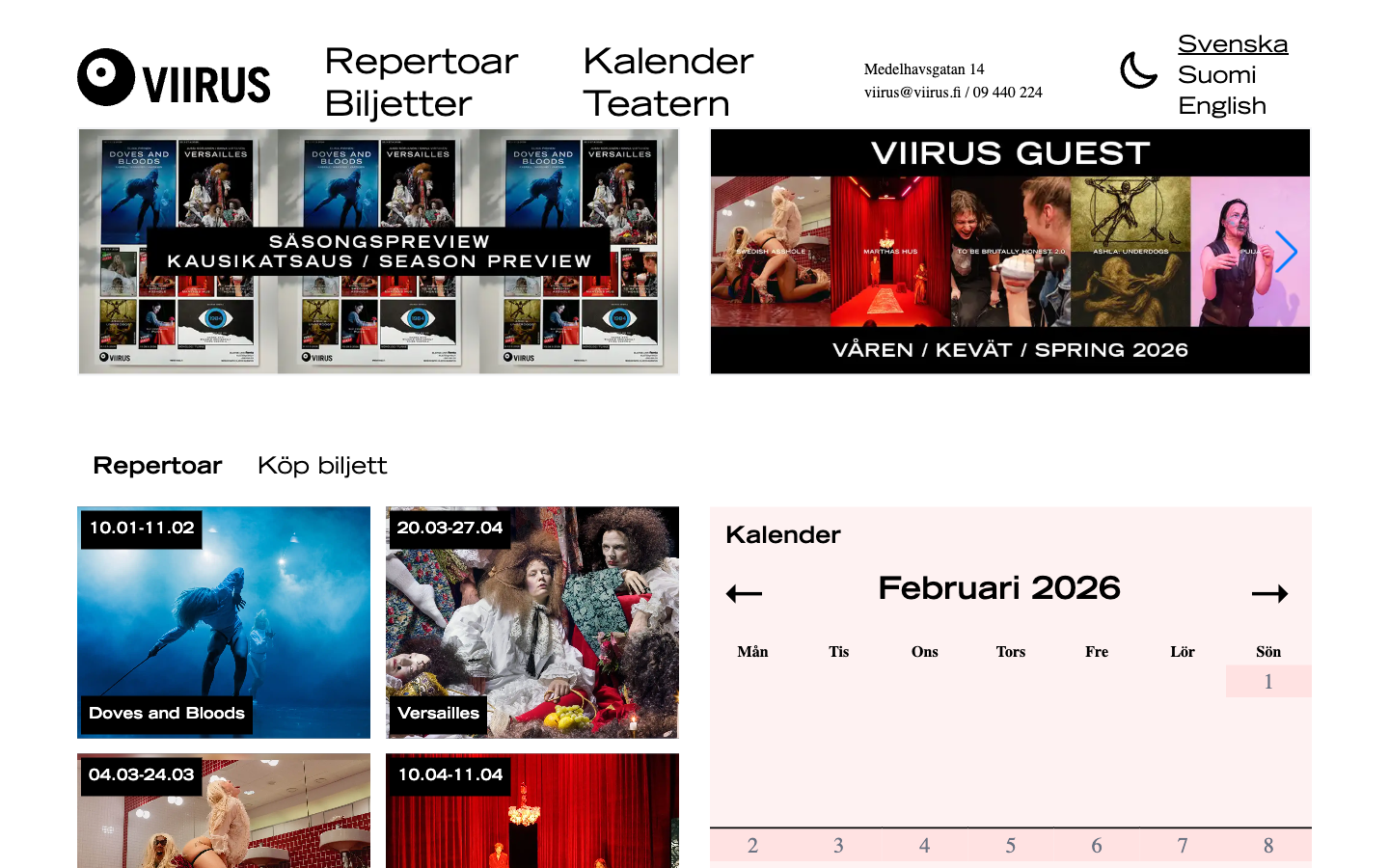
Viirus needed a public website that could make repertoire, dates, tickets, accessibility information, languages, and cultural content easier to navigate without making the theatre feel generic.
Proof strip
The numbers stay visible, but they no longer dominate the identity of the whole page.
Performance
62 to 99
Lighthouse mobile lab score
Largest Contentful Paint
8.8s to 2.0s
Faster first meaningful visual load
Total Blocking Time
130ms to 40ms
Less main-thread interruption
Carbon rating
F to B
Website Carbon Calculator
Context
Visitors do not arrive with unlimited attention. They need to understand what is on, when it starts, what language it uses, how accessible it is, and where the ticket path begins. The redesign treats those questions as the core product, not as supporting details around the visual identity.
What changed
Performance
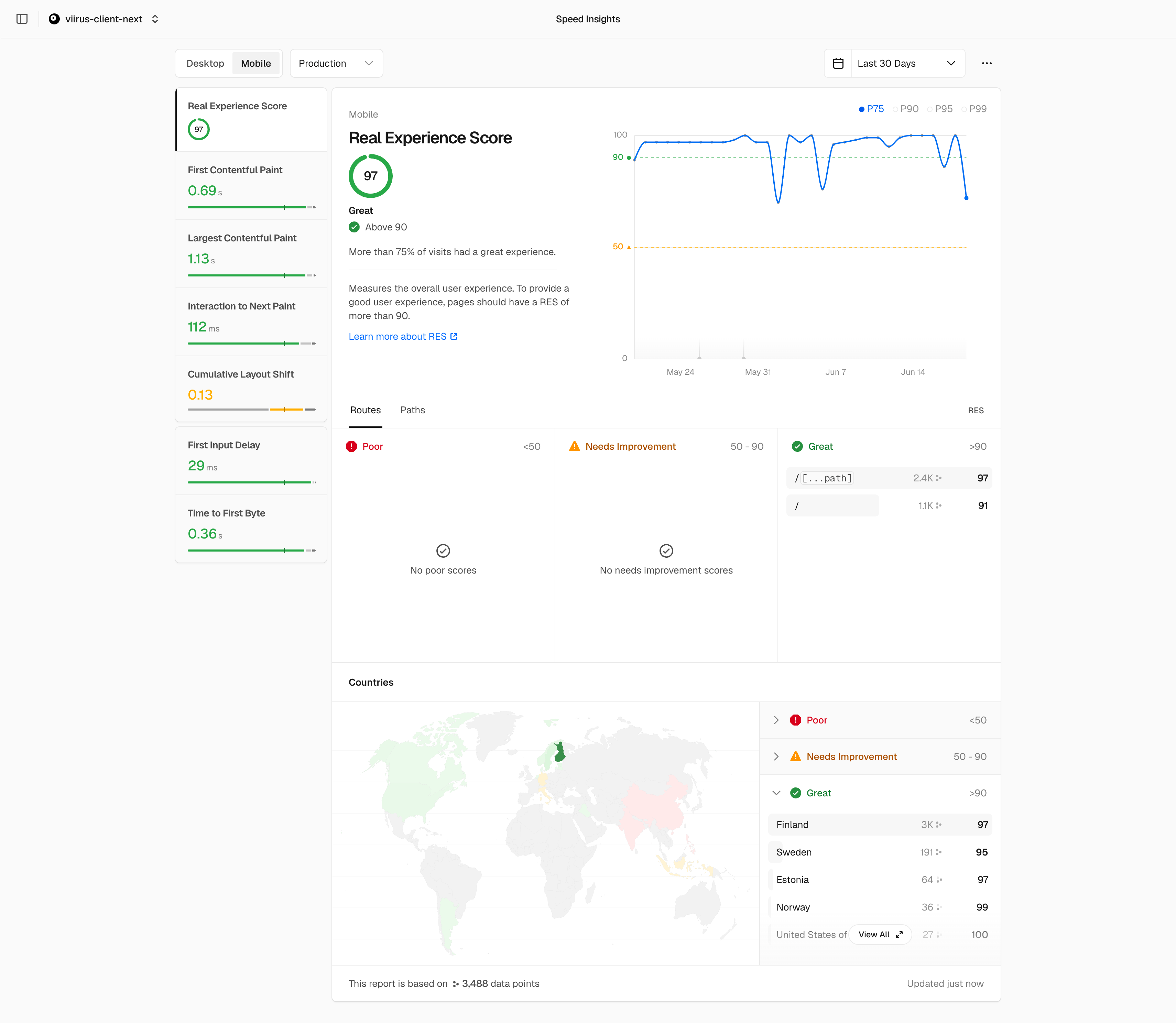
The site still carries large imagery and theatre atmosphere, but the implementation gives priority to the parts visitors need first. Modern image formats, responsive sizing, caching, and reduced blocking work make the site feel calmer on phones and slower connections.
What changed
Accessibility
The work connects accessibility to things people can actually use: text size, spacing, contrast, motion, target size, focus styling, readable links, status messages, and keyboard-safe overlays.
What changed
Operations
A theatre website changes constantly. New productions, dates, languages, subtitles, access notes, images, and ticket states all need to stay current. The page structure was shaped so routine updates feel repeatable instead of fragile.
What changed
Accessibility standard mapping
The evidence stays, but it is framed as product behavior: how an interface helps people read, move, understand status, and complete the task.
Next case study
HAAM works best where a website has to carry content, operations, accessibility, performance, and trust at the same time.
Optional Google Analytics and Microsoft Clarity measure content performance and usability. They load only if you allow them. Form values, email addresses, and chat messages are never included in analytics events.